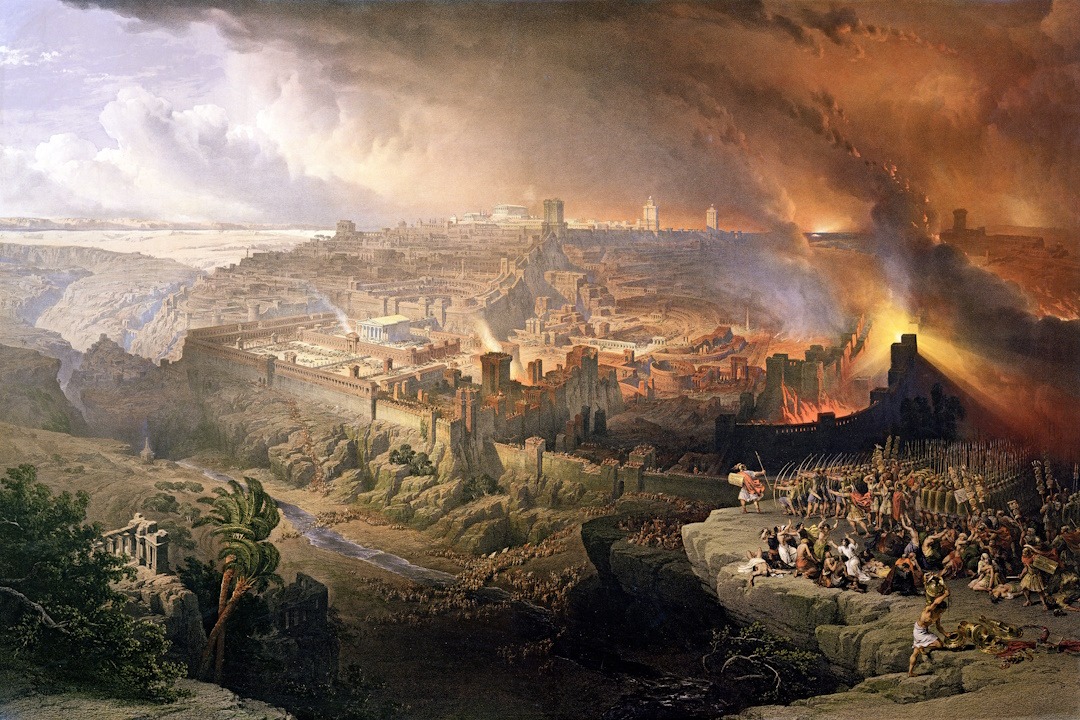
In this paper I will argue that the destruction of Jerusalem and its temple in AD 70 is a theologically significant event in redemptive history that is foundational to New Testament eschatology. The cumulative evidence will show that this event must be understood along with the resurrection, the coming of the Spirit, and the growth of the church as an eschatological sign that the kingdom has been inaugurated, that the old covenant order has come to an end, that Jesus truly is the Christ and cornerstone of a new temple, and that God’s plans and purposes of salvation for the world are now located in Christ and his church.
This argument will be advanced in three sections. The first section will demonstrate that the theme of judgment on Jerusalem was central to the OT prophets and Jesus’ own prophetic ministry. The second section will contend that this event served as the culmination of God’s judgment on Israel and the vindication of the Son of Man. In the third and final section I will argue that this event is a sign of the end of the old covenant order and also a sign of the final eschatological judgment. To conclude, I will briefly consider several implications of understanding this event as significant for eschatology.
Ultimately, my aim is to provide a more robust understanding of the profound impact that Jesus had on the role of Jerusalem and its temple in redemptive history. If the Bible is all about Jesus Christ, and if the eschatological hopes of Israel have begun to be fulfilled in the advent of Israel’s Messiah, then the theological significance of Jerusalem and its temple must be re-evaluated in light of his kingdom-inaugurating life and ministry.